
The great postal land grab: where are they now ?
First the posts tried to stop the couriers. Then they bought them.
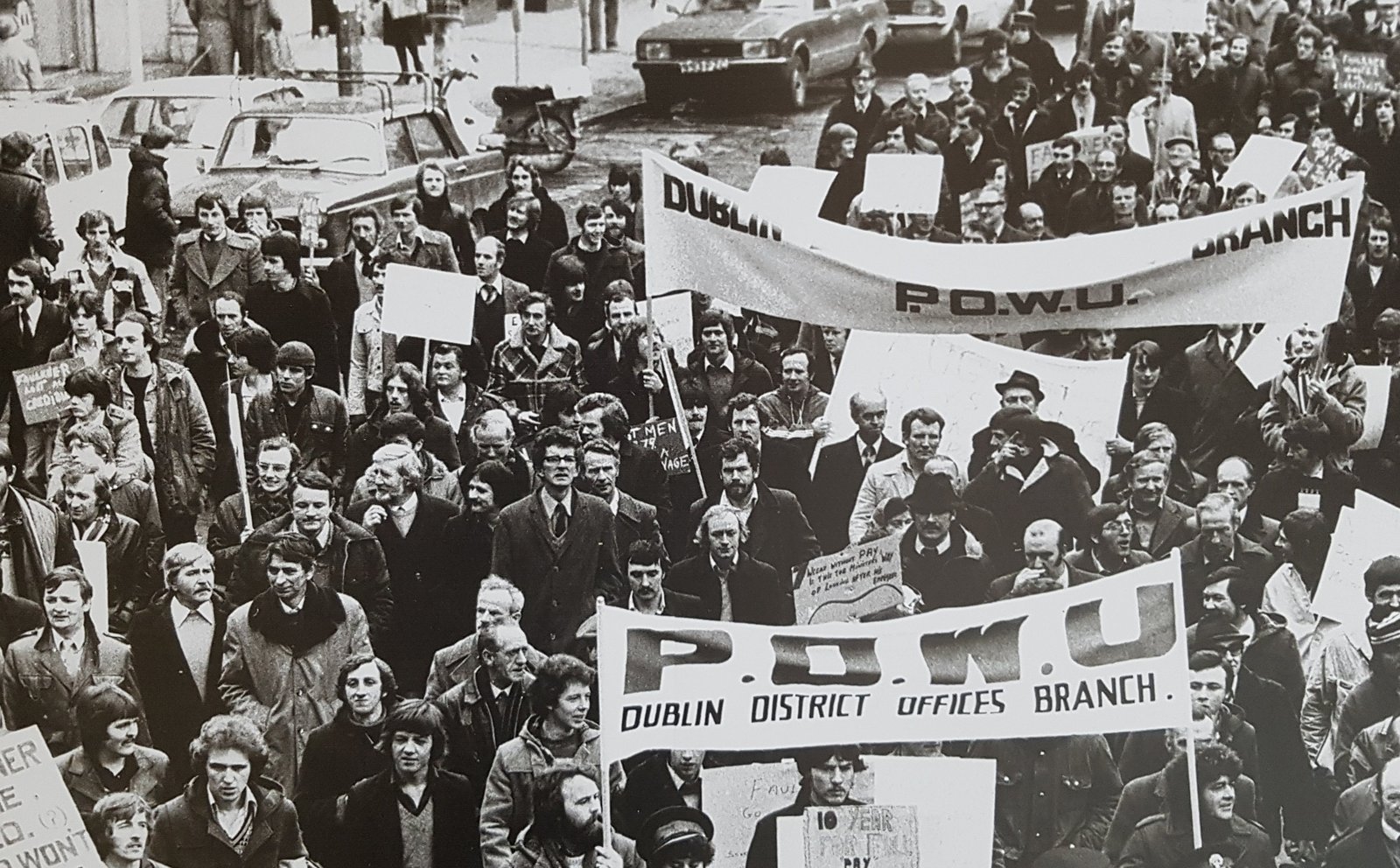
In June 1985 An Post gave the international couriers in Ireland seven days to stop operating.
Its solicitor told them that carrying documents was the post office's monopoly under the Postal Act of 1983. The Government backed An Post.
It took the European Commission and twenty months to settle the matter. The Irish government accepted the couriers in February 1987. That was the year FedEx opened for business in Ireland, and the year I joined it.
Fifteen years later the posts of Germany, France, Britain and the Netherlands owned DHL, DPD, GLS and TNT.
That is the story I want to tell here. First the posts tried to stop the couriers. Then they bought them. And for the last fifteen years or so the bill has been coming in.
I wrote about GLS and DPD in Germany in two parts (Part 1 and Part 2) over the last fortnight. Before I look at other markets I want to go back and tell the story of how we got here. It comes in four acts.
Act one: the monopoly
Ireland was no exception. Most European posts had a legal monopoly on letters and most of them defended it.
The couriers found ways around it. Some charged the customer a membership fee, so the service was a private arrangement between members. Others set a minimum chargeable weight that put the shipment outside the monopoly. A 500g envelope could be billed as 25kg.
The Document Exchange, or DX, did something similar in the UK and Ireland. Law firms, banks and other professional firms paid a subscription to belong to a private mail service. It is still going today.
The British government mostly left the DX alone. It kept important documents moving during the postal strikes of the time, and there were plenty of those.
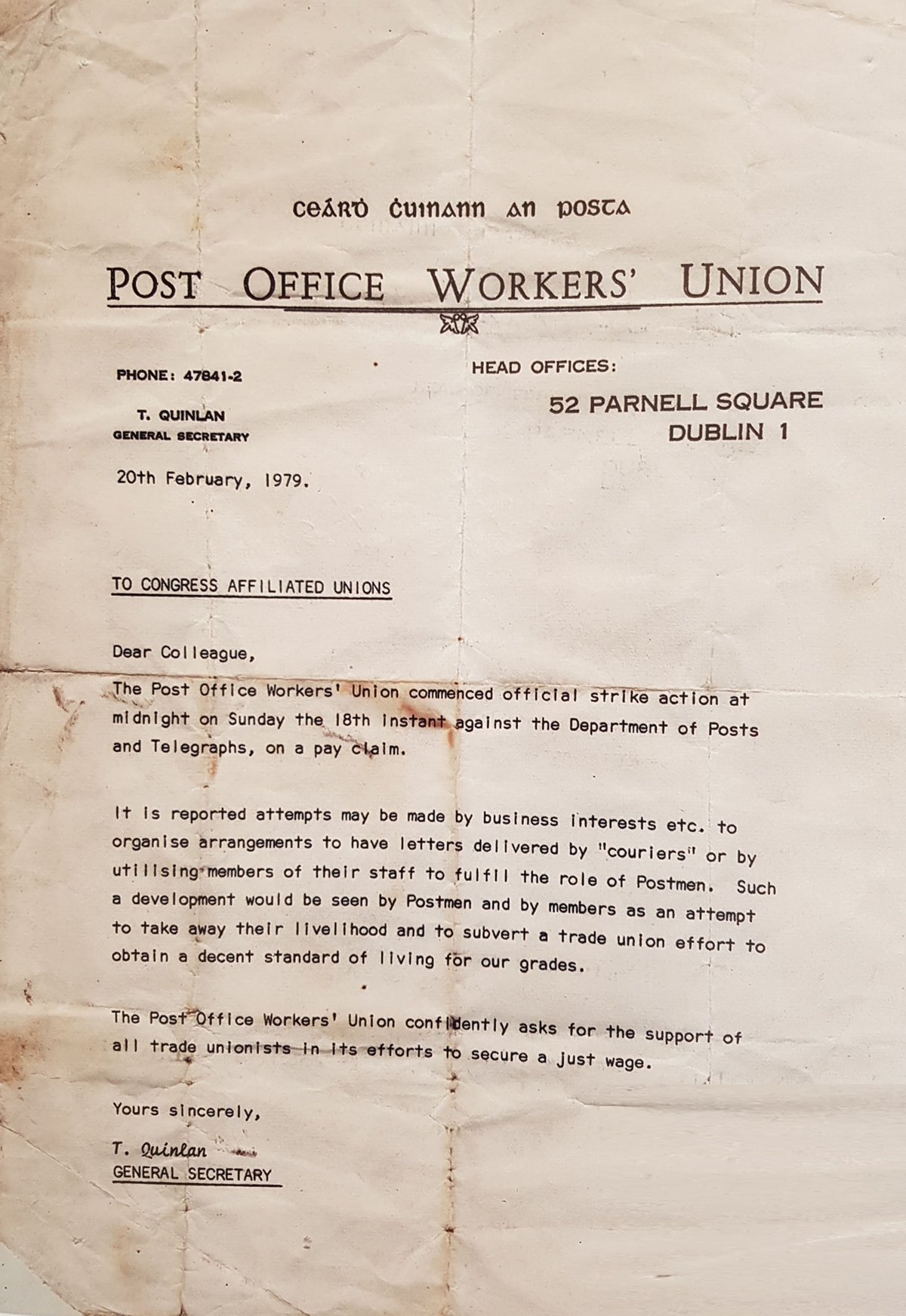
Ireland was stricter. The postal strike of 1979 ran for eighteen weeks, from February to June, and the monopoly stayed in force throughout. Two days into the strike the union wrote to its fellow unions warning that firms might have their letters delivered by “couriers”. People found their own ways to get the post through.
The strike gave Dublin its motorcycle courier business. Many of those firms and their founders are still around the courier business in Ireland today. Kevin Oliver started a motorcycle courier business in Dublin when he was a teenager and is a legend of the industry in Ireland.
The weight trick was still working twenty years later. When Rafał Brzoska started InPost in Poland in 2006, the Polish post still had a monopoly on letters under 50g. InPost fixed a small metal plate to each letter to make it heavier. The Polish post sued for more than 60 million zloty. In January 2012 a court in Kraków threw the claim out. A year later the monopoly was gone, and InPost went on to bigger things.
The couriers also learned to stand together. In August 1983 the heads of DHL, Gelco, IML, Securicor, TNT Skypak and World Courier met in a hotel in Geneva and formed the International Courier Conference. They were fierce competitors. They chose the word "conference" because nobody wanted it to sound permanent.
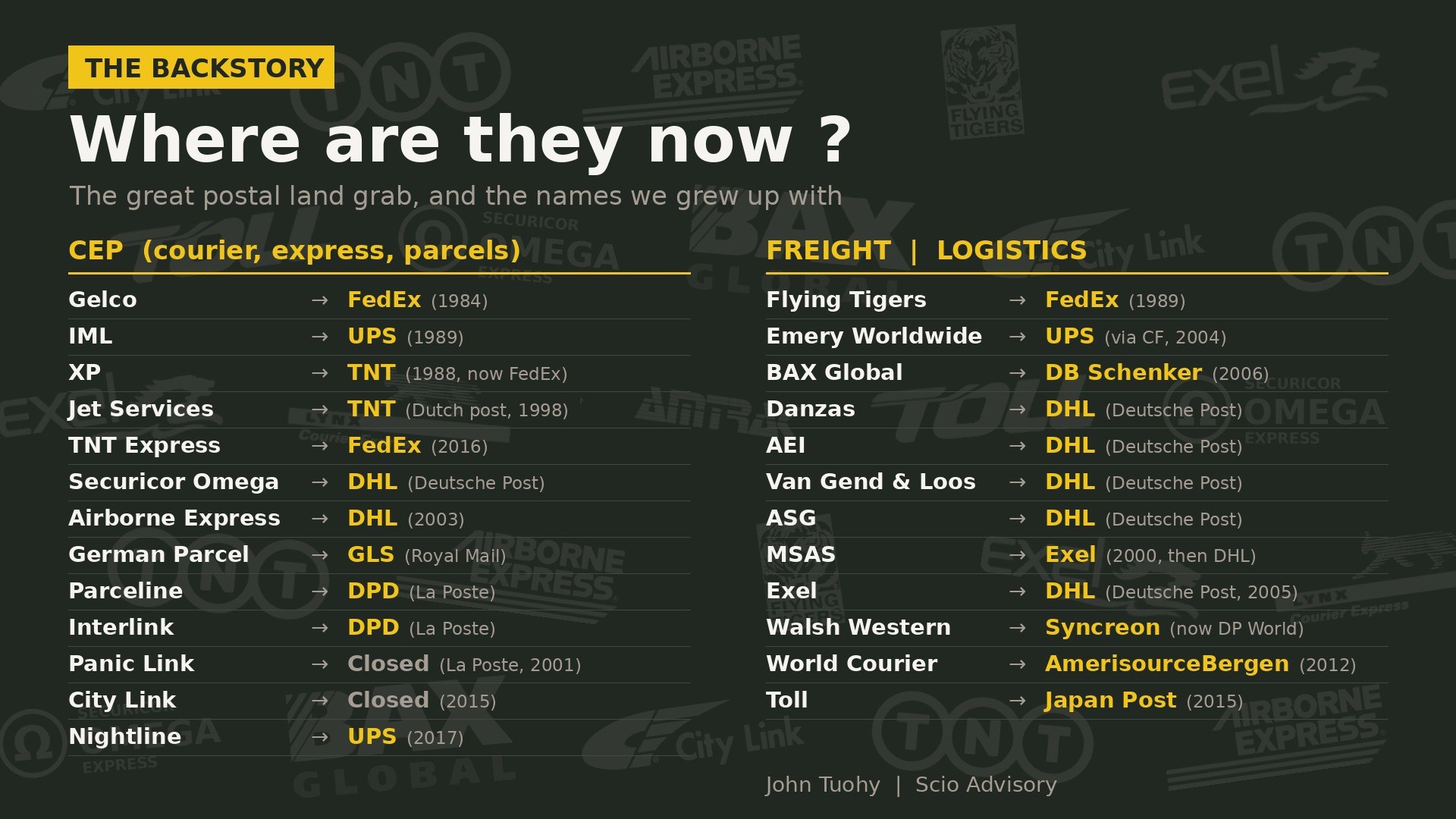
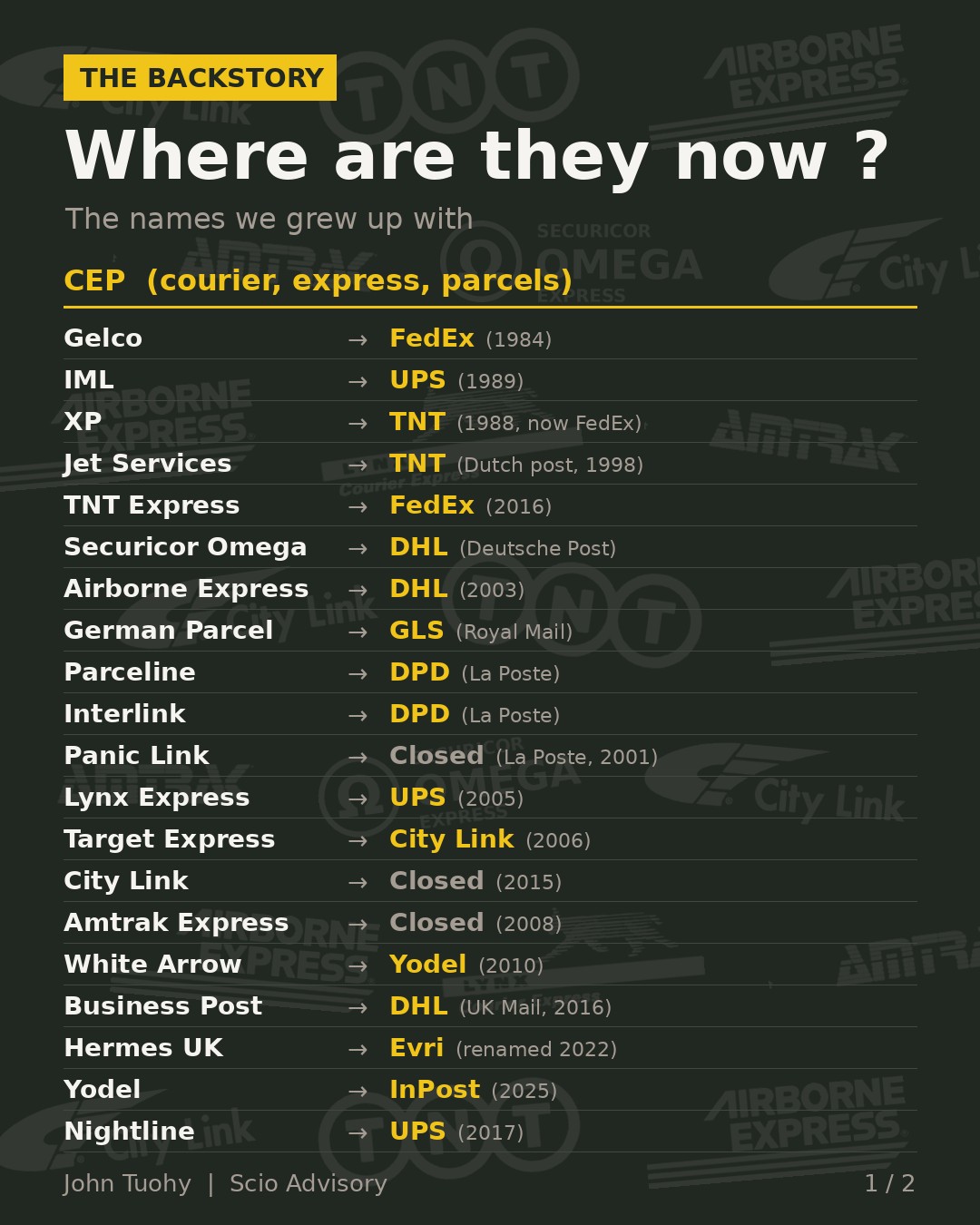
Look at that list again. Every one of those names was later bought. That is where the rest of the story goes.
Act two: the Americans
I started out in 1986 in the customs brokerage of a small international courier in Dublin and joined FedEx a year later. So act two is where I came in.
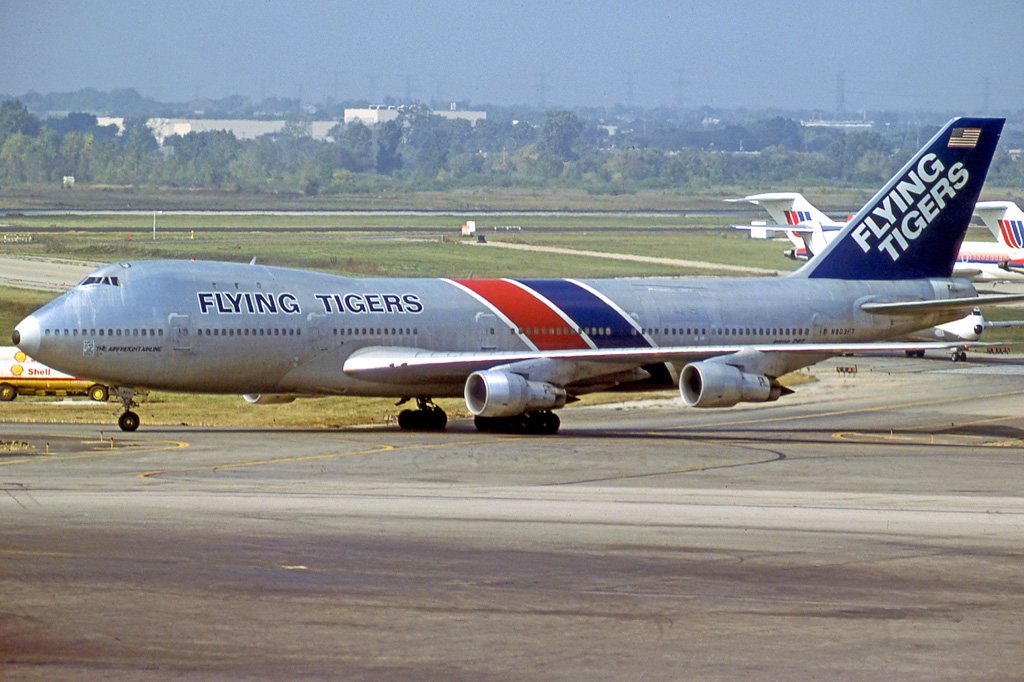
FedEx wanted to be everywhere quickly, so it bought. In 1984 it took over Gelco, a courier with service to 84 countries. Then came Wilkinson and Littlewoods in the UK and a string of local couriers from the Caribbean to the Gulf. In 1989 it bought Flying Tigers and became the biggest cargo airline in the world. I told the story of how that ended in Europe in Part 1.
UPS was more careful. It started from scratch in Germany in 1976. In 1988 it bought its Italian partner Alimondo. In January 1989 it announced seven more in one day. The biggest was IML, a British courier with service to 37 countries. The other six were in Belgium, Denmark, Finland, France, the Netherlands and Switzerland.
Where UPS didn't know the market it took a partner. In Ireland that partner was Walsh Western, a long-established freight forwarder that later became Syncreon. In the early 1990s UPS bought the joint venture out and went fully brown.
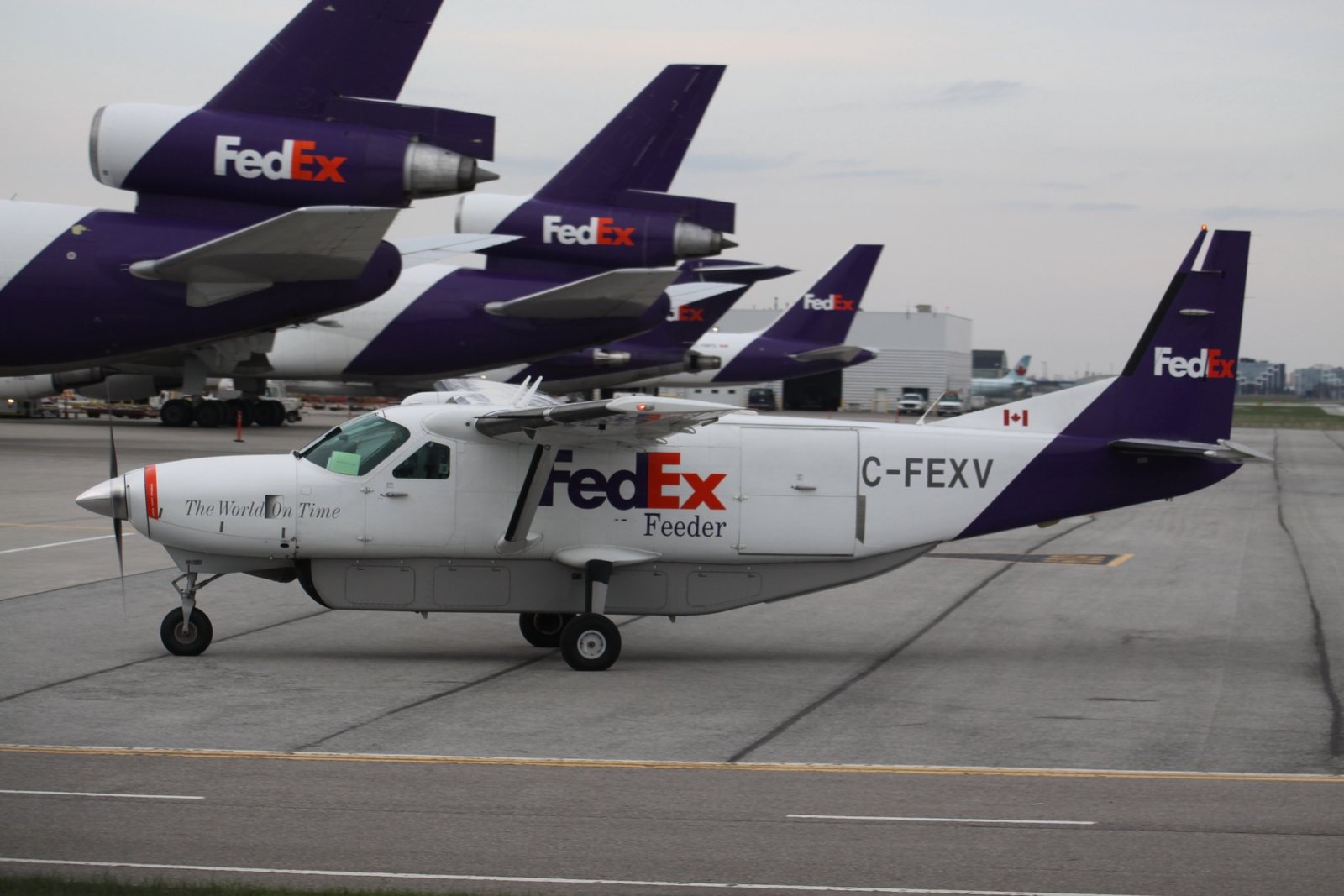
When I managed the export flight operation for FedEx in Dublin, three small propeller planes stood in a row at the airport every evening. One for DHL, one for UPS and one for FedEx. Today each of them flies a cargo jet out of Dublin every day.
The lesson of act two was there for anybody who wanted to see it. Buying a local company was the easy part. Making it work as part of a network took years, and sometimes it never happened.
Act three: the posts go shopping
The posts were watching. So were the airlines.
For a few years the airlines thought they should own the vans as well as the planes. KLM took a share in XP, a Dutch company started by Jaap Mulders in 1981 to do in Europe what FedEx had done in America. Aer Lingus and Securicor set up Aer Securicor in 1988 as a 50-50 venture. It didn't last. In 1990 Lufthansa and Japan Airlines bought into DHL.
Most of the airlines didn't stay. TNT, then an Australian company, had bought the Skypak courier business in 1983. In 1988 it bought XP as well.
In 1991 five posts, Canada, France, Germany, the Netherlands and Sweden, bought half of TNT's express business between them. In 1996 KPN, the Dutch post, bought all of TNT for about $2 billion. Two years later it paid a reported $360 million for Jet Services, which in time became a core part of TNT's network in France.
Then the EU began opening postal markets to competition. The big state posts could see what was coming. Their monopolies at home were going to go. Parcels, express and logistics looked like the future.
So they all went shopping.
Deutsche Post went biggest. A stake in DHL in 1998 and all of it by 2002. Danzas and Air Express International in 1999. The European arm of Nedlloyd. Half of Securicor Omega in the UK and Ireland in 1999 and the rest in 2003. Airborne Express in the US the same year. By April 2003 it had spent more than €7 billion, and it hadn't bought Exel yet. That came in 2005 for £3.7 billion.
Royal Mail paid a reported £300 million for German Parcel in 1999 and built GLS around it, country by country. Ireland was one of the first. In October 1999 German Parcel paid about £10 million for Williames Group, the Irish franchisee of General Parcel, with bases in Dublin and Shannon.
La Poste is the one that reached us in Ireland. It took half of DPD in 1999 and control in 2001 for about €400 million. In the UK it bought three parcel companies in less than two years. First came 51% of Panic Link in February 1999. It went after TNT and Securicor next and found neither keen to sell. So in November 2000 it paid £190 million for Parceline and Interlink Express. Interlink Ireland came with that deal.
Panic Link went into receivership in June 2001. The other two did well. But look at how long it took to make them one company in the eyes of the customer. Parceline and Interlink Ireland took the DPD name in 2008. Interlink Express in the UK became DPD Local in 2017. That is seventeen years from the cheque to the name over the door.
There was even a moment when the posts owned bits of each other. In August 2000 German Parcel, owned by Royal Mail, bought 10% of DPD, which La Poste was in the middle of buying.
I was running Nightline in Dublin through all of this. The best illustration I know is Furry Park, a business park beside Dublin Airport with the latest and greatest in logistics buildings. Danzas, AEI, MSAS and Securicor Omega were all tenants. Danzas and AEI became Deutsche Post companies in 1999, along with half of Securicor Omega. The rest followed. Before long one group held most of the leases in the park.
The UK parcels business of those years was built by some remarkable founders, and it deserves an article of its own. I will come back to it.
Act four: the bill
Some of it worked. DHL Express is one of the best businesses in our industry. GLS and DPD both grew into profitable networks across Europe.
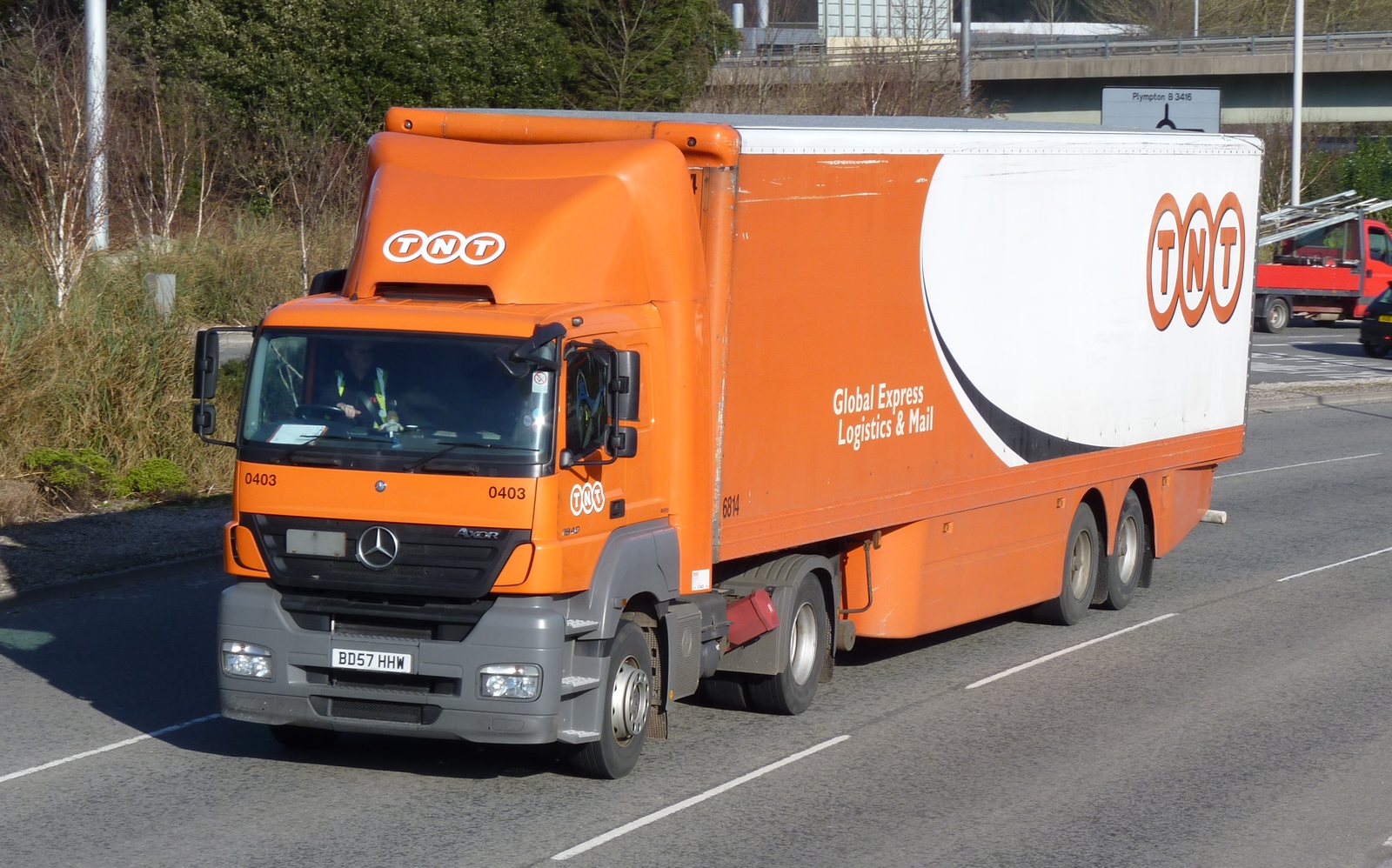
A lot of it didn't. DHL lost close to $10 billion trying to take on FedEx and UPS in the US and pulled out in 2008. It handed its UK domestic parcels business to a competitor in 2010. TNT was split in two in 2011. The mail half became PostNL, and its UK arm, TNT Post, was renamed Whistl in 2014 and sold to its managers. UPS tried to buy the express half and was blocked. FedEx got it in 2016, which brings act two and act three together rather neatly.
Europe wasn't alone. Japan Post paid A$6.5 billion for Toll of Australia in 2015. Within two years it had written off most of the value. In 2021 it sold Toll's express business in Australia and New Zealand for just 700 million yen. That is about A$8 million.
The pattern is the same each time, from Panic Link to Toll. A post with a strong home market and access to cheap money buys a business in somebody else's home market. Then it finds out that parcels are a local business.
Still kings at home
Here is what strikes me most. After all that money, look at who is strongest where.
DHL handles more than 40% of parcels in Germany. La Poste owns Colissimo, Chronopost and DPD France. PostNL has about 55% of Dutch parcels.
The one exception is the most interesting. Royal Mail has lost a lot of ground in UK parcels to Evri and Amazon. In 2025 it was sold, along with GLS, to Daniel Křetínský's EP Group. By then GLS, the business it bought abroad, was the part making the money. It still is. In the year to March 2026 GLS made an operating profit of £237 million on sales of £5.2 billion. Royal Mail made about £5 million on £8.4 billion.
What happens now
The buying years were about market share. I think the next few years will be about profit.
GLS and DPD in Germany is the first big move of that kind. German Parcel, now called GLS, is taking control of DPD in Germany, twenty six years after it bought that 10%.
I don't think it will be the last. In each market the question is the same. Who is making money, who isn't, and who would be better off as a partner or a seller ?
Over the coming weeks I will look at Italy, France, Spain and Portugal with that question in mind.
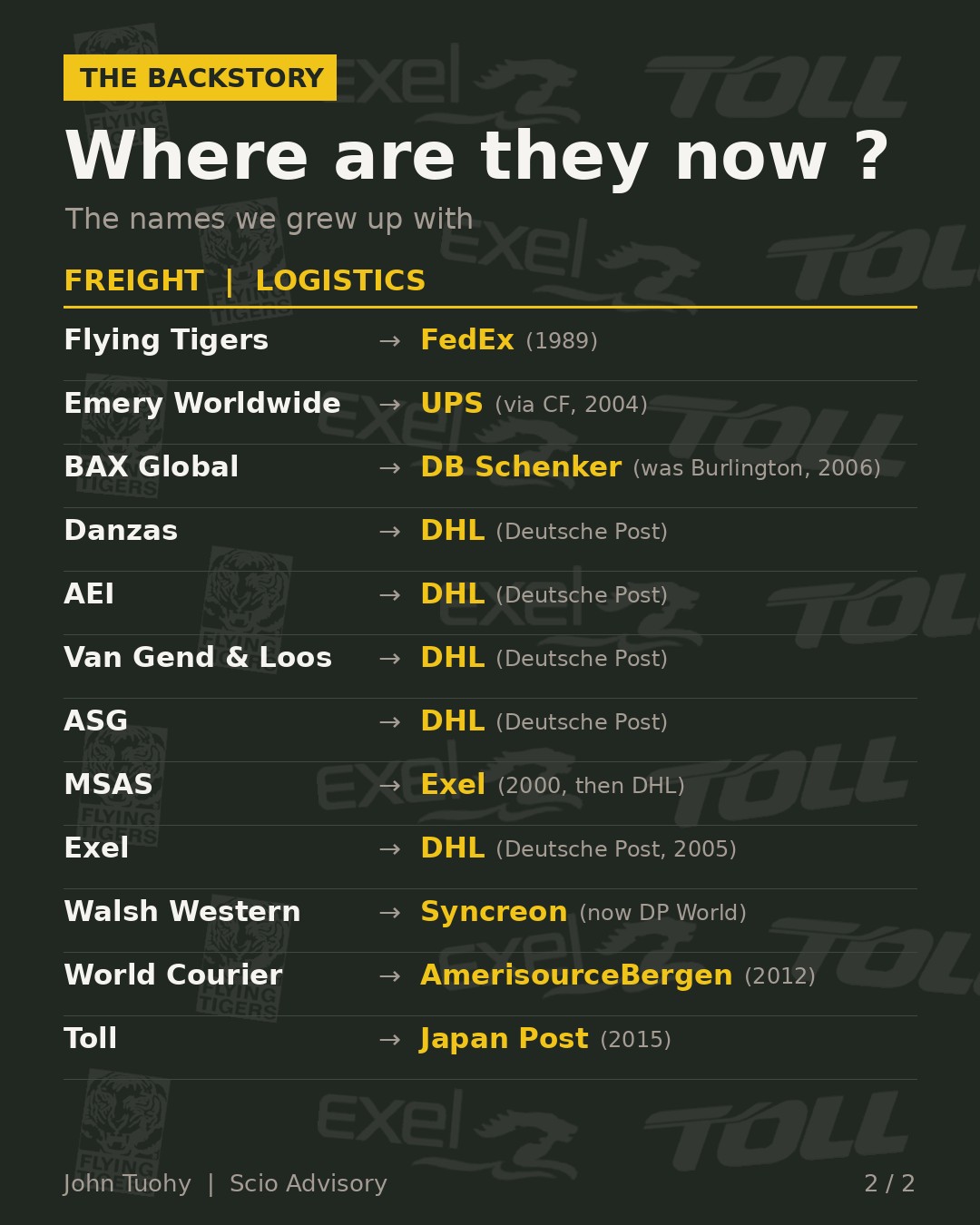
I've put some of the old names on the panels in this article. Gelco, IML, XP, Jet Services, Securicor Omega, Panic Link, Danzas, AEI and a good few more. How many of them did you work for, or compete with ? And which names have I left out ?
If you have photographs from those days, I would love to see them. I will add the best to the Parcel history timeline, with credit.
If you would prefer not to comment in public, send me a direct message on LinkedIn or an email to jtuohy@scio.ie.
The full timeline of who bought whom, from 1976 to 2026, is on the Parcel history page.
First published on LinkedIn on 29 November 2026. Sources: James I. Campbell Jr., The Rise of Global Delivery Services (2001), The New York Times, The Irish Times, the Christian Science Monitor, Post & Parcel, the Journal of Commerce, Reuters, DHL Group history, IDS results and company announcements. The views on what happens next are my own.